When the Music Stopped
For a brief moment, the campus felt different.
College Rivals Season 4 had arrived at Centurion University’s Bhubaneswar campus, where I work. There was music, excitement, competition, and a sense that something unusual was happening. Students who ordinarily moved between classrooms, hostels, and their phones were suddenly participating in a shared experience.
Thanks for reading Abhi's Substack! Subscribe for free to receive new posts and support my work.
They were not merely watching life through a screen. They were living it.
That distinction matters.
Young people in metropolitan and tier-one cities regularly encounter large events, brand activations, competitions, creative communities, and new professional cultures. Such exposure helps them see how the wider world works. It teaches them how to communicate, collaborate, organize, perform under pressure, and imagine possibilities beyond the boundaries of their immediate environment.
Students on smaller or less-connected campuses deserve those experiences too.
Events like this are not simply entertainment. Somewhere among the participants could be a future event manager, entrepreneur, esports professional, designer, filmmaker, marketer, or campus leader. Leadership is not born only inside classrooms. Sometimes it begins when a student volunteers, manages a crowd, solves an unexpected problem, takes responsibility, or sees a world they had never imagined entering.
This event was an opportunity for our students to experience something different. Without opportunities like it, many may spend those same hours scrolling endlessly through reels—watching other people participate in lives they have not been given the chance to explore themselves.
For a while, I watched our students step out of that passive role.
They were happy.
Then the atmosphere changed.
When joy required permission
Red Bull sponsored the event and its energy drink was being distributed. I was told that members of the management regarded Red Bull as an alcoholic drink and believed it should not be given to students.
Red Bull is not an alcoholic beverage. It is a caffeinated, sugar-sweetened energy drink. Like other products containing caffeine and sugar, it should be consumed responsibly, and it may not be suitable for everyone. But any restriction should begin with correct information.
Instead, the distribution was stopped and the event was cut short.
One moment, the students were celebrating. The next, their excitement had been interrupted by a decision they neither understood nor had any role in making.
Watching their faces change filled me with grief.
The music may have continued briefly, but the spirit of the occasion had already disappeared. It was not merely an event being shortened. It felt like student joy had been told that it needed permission.
Why was I organizing it?
There was already a dedicated university cell responsible for organizing such activities. So why did I become involved?
Because the students came with enthusiasm.
They wanted something like this to happen on their campus. Their proposal and excitement had not found support through the designated channel. I listened when they spoke, and I believed their enthusiasm deserved more than another rejection.
Perhaps that was my mistake.
I took a risk for the students without expecting any personal or professional benefit. There was no promotion waiting for me, no financial reward, and no private advantage. I became involved because I believed that giving students meaningful exposure was part of serving them.
Now, I am paying the price for that decision.
This is one of the most painful lessons of the experience: institutions often celebrate initiative in principle, but an individual who takes initiative can become vulnerable when something becomes inconvenient.
It is easier to ask why I became involved than to ask why the structure created for such events did not respond to the students in the first place.
Perhaps I should have remained silent. Perhaps I should have told the students that nothing could be done. That would have been safer for me.
But would it have been better for them?
The question that remained
After the event, I began researching why energy drinks provoke such strong reactions. I wondered whether perception had overtaken evidence.
Was it the aggressive branding? The association with nightlife and extreme sports? Did the word energy make the product appear more threatening than the familiar drinks already available on campus?
According to Red Bull India, a 250-millilitre can contains 75 milligrams of caffeine and 27 grams of sugar. Coca-Cola India lists regular Coke as containing 8.7 milligrams of caffeine per 100 millilitres. The drinks are not identical, and energy drinks deserve appropriate caution. But Coke, Thums Up, and numerous other sweetened or caffeinated beverages are also processed drinks with health implications.
If the concern is genuinely about student health, should we not evaluate all such products using a consistent standard?
Why single out the unfamiliar can while familiar bottles remain unquestioned?
This is not an argument that Red Bull is healthy or that it should be distributed without limits. It is an argument for informed, proportionate, and consistent decisions.
The comfort of selective concern
Institutions often find it easier to prohibit a visible object than to confront an invisible problem.
A can can be removed. A sponsor can be stopped. An event can be shortened. These actions are immediate and highly visible, creating the appearance of decisive protection.
Student distress is harder to address.
Academic pressure, fear of failure, loneliness, discrimination, financial strain, and mental-health stigma cannot be removed through a single instruction. Addressing them requires sustained listening, trained support, trust, and a willingness to examine institutional culture.
India’s Ministry of Education, citing National Crime Records Bureau data, reported that 13,044 students died by suicide in 2022. Academic pressure is recognized as one of several serious contributing factors.
Energy drinks do carry documented risks, particularly when consumed excessively or by vulnerable individuals. It would therefore be irresponsible to claim that they are harmless.
But proportionality matters.
Why are institutions sometimes able to act within minutes when a branded beverage appears, yet so slow to confront the conditions that steadily damage students’ wellbeing?
The real question is not whether we should care about what students drink. We should. The question is whether our concern remains equally energetic when the threat is less visible, more complicated, and embedded within our own systems.
This was never only about a drink
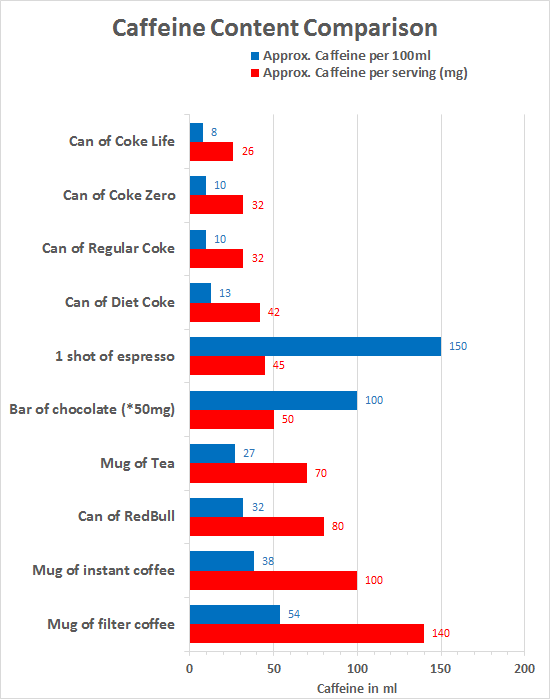
https://nicholasrogoff.com/2017/01/20/comparison-of-caffeine-content-in-coca-cola-coke-products
Brands can defend themselves. Students often cannot.
This is not an advertisement for Red Bull. Nor is it an attempt to determine what every decision-maker intended. The intervention may have come from genuine concern. But genuine concern deserves accurate information, fair standards, and respectful communication.
A university should teach students to examine evidence, assess risks, and make responsible choices. When an institution acts on perception before establishing the facts, what lesson does it teach?
That authority matters more than inquiry?
That unfamiliarity is evidence of danger?
That initiative is welcome only when it causes no discomfort?
And that student happiness is acceptable only until it becomes inconvenient?
What care could have looked like
A better response would not have required abrupt shutdown.
The university could have verified the ingredients, consulted a qualified health professional, considered serving sizes, communicated genuine risks, and established a consistent beverage policy. It could have spoken with the organizers and students before cutting the experience short.
Most importantly, it could have treated students as participants in campus life rather than passive recipients of control.
Care is not measured by how quickly we say no.
It is measured by whether we understand the issue, apply standards fairly, communicate honestly, and preserve dignity while acting.
I organized this event because I listened to the students. I saw their enthusiasm and wanted to create an opportunity that the existing system had not provided. I wanted them to encounter something beyond their ordinary routine—to participate, collaborate, and glimpse the kind of experiences more readily available in larger cities.
I did not do it for personal benefit.
I took the risk for them, and I am paying for it.
Even so, I cannot accept that listening to students was the real mistake.
The true mistake would be to teach young people that their curiosity is a nuisance, their enthusiasm is a problem, and the safest response to every unfamiliar opportunity is to shut it down.
Because when we repeatedly extinguish these moments, we do not merely end events.
We shrink the world our students believe they are allowed to enter.
Thanks for reading Abhi's Substack! Subscribe for free to receive new posts and support my work.
Share this post
Enjoyed this? Get new posts by email